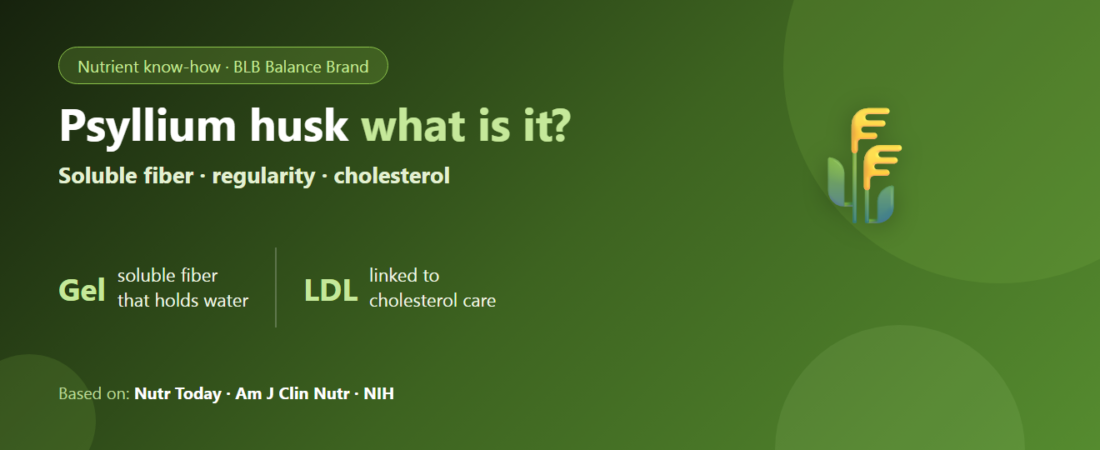
Psyllium husk is a popular dietary fiber that swells into a gel when it meets water · It is used both for regularity and for cholesterol care · What is it, how does it work, and how do you take it safely · Here is a simple summary
holds water
cause constipation
Psyllium is the seed husk of the Plantago ovata plant, rich in soluble dietary fiber · When it meets water it swells into a gel, making stool softer and bulkier, which supports bowel movements · The gel also binds bile acids, a mechanism research has linked to cholesterol care
1 What psyllium helps with
- Regularity — helps with constipation, and helps firm up stool in some people with loose stools
- Cholesterol — research has found that soluble fiber can modestly lower LDL
- Blood sugar / fullness — the gel slows absorption and helps you feel full longer
2 How to take it safely
- Drink plenty of water with it — very important, otherwise the gel may cause constipation/discomfort
- Start small — reduces gas/bloating in the first days
- Space it from medicines — fiber may interfere with the absorption of some medicines
⚠️ People with bowel obstruction or difficulty swallowing should consult a doctor
💡 Did you know? BLB F combines 7,023 mg of dietary fiber + pro/pre/postbiotics (3P) for all-round gut care, adding good microbes plus fiber to support bowel movements · Thai FDA 26-1-10867-5-0051 · Halal · A dietary supplement, not a medicine
3 Psyllium vs other fibers
Psyllium is a soluble fiber that stands out for its gel · unlike insoluble fiber (rice bran), which mainly adds bulk · Eating a variety of fiber and drinking enough water is the key to gut health
References
- McRorie JW. Evidence-Based Approach to Fiber Supplements: Psyllium. Nutr Today.
- Jovanovski E, et al. Psyllium and LDL cholesterol. Am J Clin Nutr.
- NIH / MedlinePlus — Psyllium.
💡 Looking for a helper? Read next: Which probiotic + fiber brand is best — choose wisely 👉