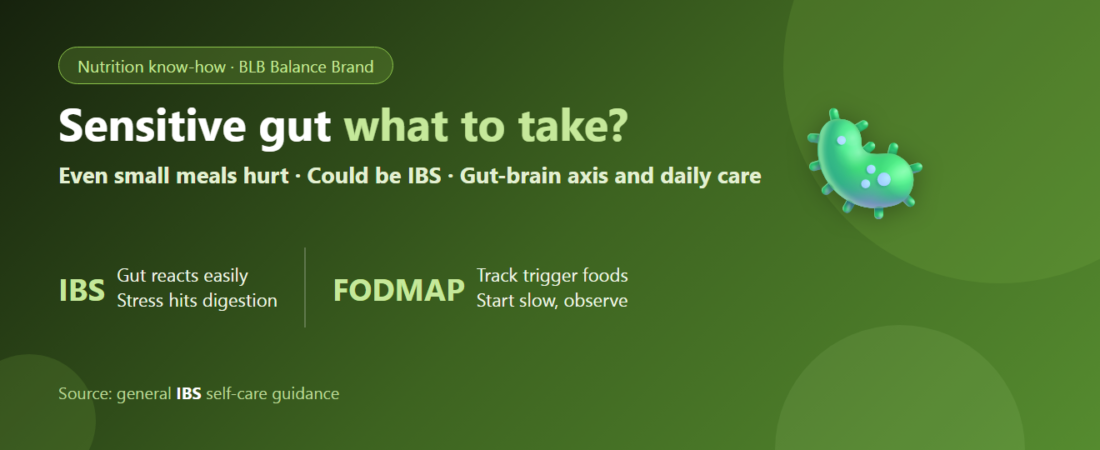
A sensitive gut: even a small meal brings cramps, bloating and churning, with constipation and loose stools taking turns. This often fits irritable bowel syndrome (IBS) · This article sums up self-care and the gut support options worth knowing
A sensitive gut is often linked to irritable bowel syndrome (IBS), where the bowel reacts easily to triggers and to emotions · The ‘gut-brain’ axis means stress affects digestion directly · Care focuses on spotting trigger foods, managing stress and supporting microbial balance
1 How to look after yourself
- Keep a food diary to find your triggers (some people react to the FODMAP group)
- Eat at regular times, chew slowly, and stop before you are overly full
- Manage stress and get enough sleep, because both affect the gut directly
2 Gut support options
- Probiotics — some strains have been studied in relation to IBS symptoms
- Prebiotics and suitable fiber — start slowly, because some types trigger gas in people with a sensitive gut
- Postbiotics — compounds made by beneficial microbes that help look after the gut
⚠️ These are support options, not a medicine for IBS. Diagnosis should be made by a doctor.
3 How to choose a supplement
- Multi-strain probiotics + pre/postbiotics
- Start with a small amount and observe how you feel
- Pair it with stress management and diet
4 When to see a doctor
If you have warning signs such as weight loss, blood in the stool, paleness, severe abdominal pain at night, or a sudden change in bowel habits in an older adult, see a doctor so other conditions can be ruled out, not just IBS.
5 Frequently asked questions (FAQ)
Does a sensitive gut mean IBS?
It may well be IBS, in which the bowel reacts easily to triggers, but a doctor has to make the diagnosis and rule out other conditions first.
Do probiotics help with IBS?
Some strains have been studied and do help certain people. Results vary from person to person, so try them consistently and observe.
What is FODMAP?
A group of carbohydrates that ferment easily in the gut and set off symptoms in people with a sensitive gut. Adjusting FODMAP intake should be done under professional guidance.
Can stress really cause stomach pain?
Yes. The gut-brain axis means stress can set off bowel symptoms, so managing stress does help.
- A dietary supplement is not a medicine — it does not prevent, treat or cure disease; it is only a support for looking after your health
- People with an underlying condition or on regular medication should consult a doctor or pharmacist before use, as interactions are possible
- Women who are pregnant or breastfeeding should consult a doctor first
- Weight loss / blood in the stool / paleness / pain at night should be checked by a doctor to rule out other conditions
References
- General guidance on managing irritable bowel syndrome (IBS).
💡 Looking for something to support your gut? Read next: Probiotics for a sensitive gut: how to choose 👉