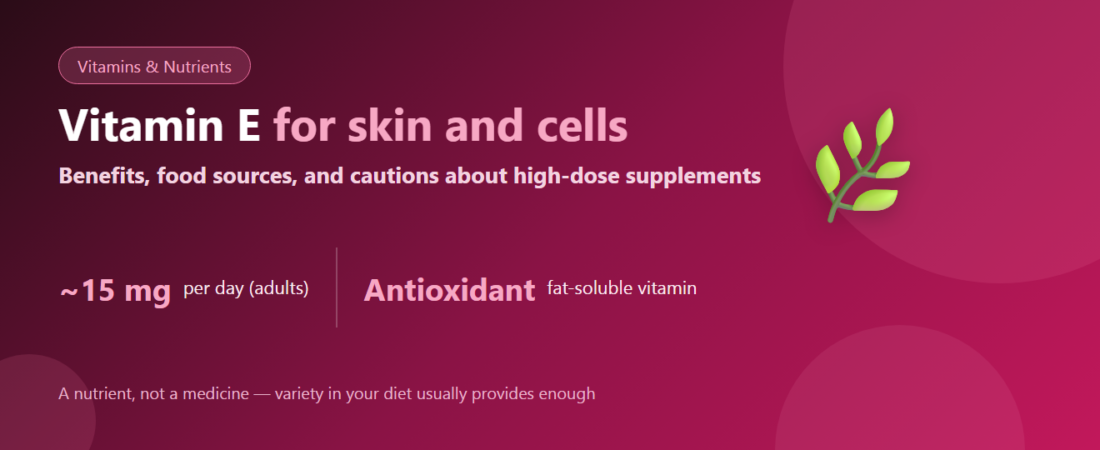
Vitamin E is a vitamin people often bring up when talking about “beautiful skin and anti-aging” · But what does vitamin E actually do, how beneficial is it, which foods provide it, do you need to supplement it, and is taking high doses dangerous? · This article explains vitamin E in an easy-to-understand way, along with the truths many people get wrong.
vitamin
for adults
seeds
Vitamin E is a fat-soluble vitamin and an important antioxidant · It helps protect cell membranes from free-radical damage and works together with other antioxidants such as vitamin C · It is found in vegetable oils, nuts, and seeds · It is a nutrient, not a medicine, and supplementing it does not treat any disease.
1 What are the benefits of vitamin E
| Role | Details |
|---|---|
| Antioxidant | Protects cell membranes from oxidative stress |
| Skin health | An antioxidant involved in skin care |
| Works with vitamin C | Supports the body’s antioxidant system |
| Protects fats in the body | Helps keep fats (such as those in cell membranes) from being oxidized |
These roles are the physiological functions of a nutrient, not the treatment of disease · Getting an adequate amount of vitamin E is part of good health.
2 Foods high in vitamin E
| Food | Notes |
|---|---|
| Vegetable oils (rice bran, sunflower, olive) | A very good source of vitamin E |
| Nuts and seeds (almonds, sunflower seeds) | Snacks high in vitamin E |
| Avocado | A healthy-fat fruit that contains vitamin E |
| Leafy green vegetables (spinach, broccoli) | Contain some vitamin E |
| Wheat germ | A concentrated source of vitamin E |
People who eat a varied diet with healthy fats in their meals usually get enough vitamin E because vitamin E is absorbed well when eaten together with fat.
3 How much do you need per day — and cautions about high-dose supplements
- Recommended amount (adults): about 15 milligrams/day
- Tolerable Upper Intake Level (UL): about 1,000 milligrams/day from supplements
⚠️ Vitamin E is a fat-soluble vitamin — it can accumulate in the body. Taking very high doses continuously may increase the risk of easy bleeding, especially in people taking blood-thinning medication · So you should not take high-dose supplements on your own without need. Getting it from food is the safest way.
4 Vitamin E and skin — the truth you should know
- Vitamin E is an antioxidant that is involved in caring for the skin from within
- Applying vitamin E directly to the skin may irritate some people; test it first
- Healthy skin comes from many factors — many kinds of antioxidants, collagen, sun protection, sleep, and water, not vitamin E alone
💡 Care for your skin holistically from within · Healthy skin needs antioxidants, collagen, and all-round care · BLB C is a dietary supplement that combines collagen peptide, glutathione, astaxanthin, and vitamin C — focused on skin care and antioxidants · Suitable for those who want to care for their skin from within · It is a dietary supplement, not a medicine, and has no effect in preventing, alleviating, or treating any disease · Eating a varied diet and using sun protection remain the most important foundation.
5 Frequently asked questions (FAQ)
Does vitamin E really help the skin?
Vitamin E is an antioxidant involved in skin care · But healthy skin comes from many factors combined · It is not a medicine that whitens the skin or clears melasma. Sun protection and all-round care matter more.
Do you need to take a vitamin E supplement?
Most people who eat a varied diet (with vegetable oils, nuts, seeds) usually get enough · High-dose supplements are unnecessary and may carry risks; consult a professional.
When is the best time to take vitamin E?
Vitamin E is fat-soluble and is absorbed well when taken with a meal that contains fat.
Can vitamin E and vitamin C be taken together?
Yes · Both are antioxidants that work together in a complementary way · Getting them from a varied diet is a good thing.
Is taking a lot of vitamin E dangerous?
Very high doses of vitamin E taken continuously may increase the risk of easy bleeding, especially in people taking blood-thinning medication · You should not exceed the recommended dose without need.
6 Cautions
- Vitamin E can accumulate in the body — very high-dose supplements risk easy bleeding
- People taking blood-thinning medication, or before surgery, should consult a doctor before supplementing with vitamin E
- Beware of duplicate intake from multiple supplements
- Dietary supplements are not medicine; they have no effect in preventing, alleviating, or treating any disease and are only an aid to caring for your health
7 Summary
- Vitamin E is a fat-soluble antioxidant — it protects cells and cares for the skin
- You get it from food — vegetable oils, nuts, seeds, avocado, leafy greens
- Adults need ~15 mg/day · people who eat a varied diet usually get enough
- High-dose supplements risk easy bleeding — do not exceed the dose without need
Vitamin E is a nutrient that is good for skin and cells, but it is not a “miracle cure” — eating a varied diet usually provides enough · Healthy skin comes from all-round care: nutrients, sun protection, and rest, not relying on any single vitamin.
References
- NIH Office of Dietary Supplements — Vitamin E Fact Sheet.
- Harvard T.H. Chan School of Public Health — Vitamin E.
- MedlinePlus — Vitamin E.
- Linus Pauling Institute — Vitamin E.