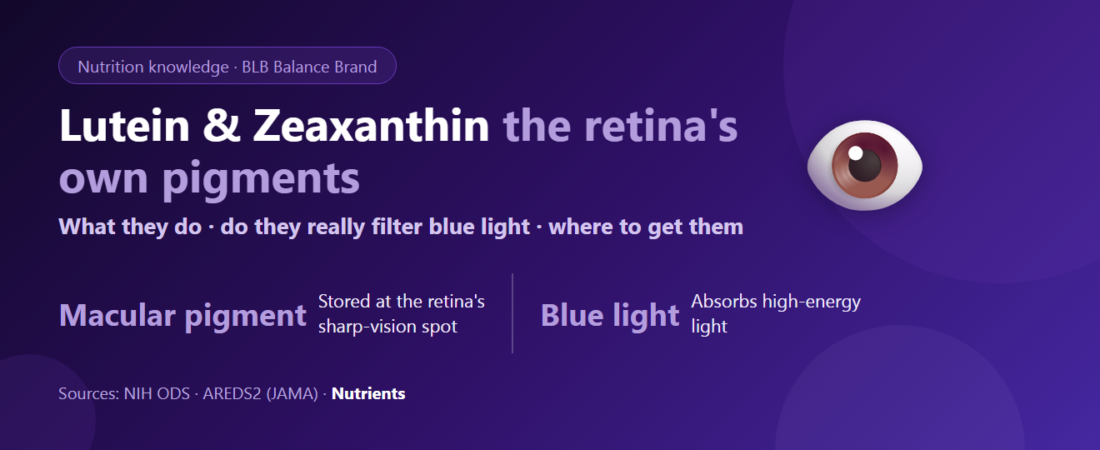
Lutein and zeaxanthin are natural pigments that the “retina” stores up to protect itself from light · In an age when we stare at screens all day, these two compounds come up constantly whenever eye care is discussed · What are they, do they really filter blue light, and where do you get them · Here is the simple version
(macula)
source
Lutein and zeaxanthin are xanthophyll carotenoids that the body cannot make on its own — they have to come from food · Both accumulate at the “sharp-vision spot (macula)” of the retina, where they act like built-in sunglasses, absorbing high-energy blue light and fighting free radicals
1 What lutein/zeaxanthin do
- Filter blue light — from sunlight and screens, lowering oxidative stress on the retina
- Fight free radicals in the retina — protecting the light-sensing cells
- Research on vision and ageing — interest in their role in long-term retinal health
2 How they differ from bilberry
Bilberry (anthocyanins) is known for capillary blood flow and tired eyes, while lutein/zeaxanthin are pigments that sit in the retina itself · The two groups look after your eyes through different mechanisms and complement each other
⚠️ They are an aid for eye care, not a medicine for eye disease · If you have vision problems, you should see an ophthalmologist
💡 Did you know? BLE looks after your eyes and your rest with bilberry + GABA + L-Theanine, made for people who use their eyes hard and want to unwind before bed · Thai FDA 10-3-05764-5-0001 · a dietary supplement, not a medicine, with no effect on eye disease
3 Which foods give you lutein
- Dark leafy greens — spinach, kale, broccoli (the best source)
- Egg yolk, corn
- Eat them with a healthy fat — they are fat-soluble, so absorption improves
References
- NIH ODS — Lutein and Zeaxanthin.
- AREDS2 Research Group. Lutein/zeaxanthin for age-related macular degeneration. JAMA.
- Mrowicka M, et al. Lutein and Zeaxanthin and Their Roles in Eye Health. Nutrients.
💡 Looking for something to help? Read next: Eye supplements: which brand is best — how to choose well 👉